Spring Outdoor Workouts: Best Green Exercise Trends for 2026
Winter has a way of making your couch feel like the most logical place to be. By the time March rolls around, the combination of shorter days, cold air, and holiday comfort eating has quietly derailed even the best fitness intentions.
But spring changes everything — and not just because the weather gets nicer.
Research consistently shows that exercising outdoors, what scientists now call “green exercise,” produces measurably different benefits than the same workout done inside. In 2026, a wave of new fitness trends is leaning directly into that science. From walking yoga to nature-based strength circuits, outdoor fitness is having a major cultural moment.
This guide covers the best spring outdoor workouts, the science behind why exercising in nature works so well, and how to build a practical spring fitness reset — even if you’ve barely moved since January.
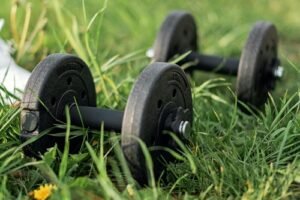
What Is Green Exercise — And Why Is It Trending in 2026?
“Green exercise” refers to physical activity that takes place in natural or semi-natural environments: parks, trails, forests, beaches, and even grassy urban spaces. It’s not a new concept — humans evolved moving in nature, after all — but the science behind it has become increasingly compelling.
A landmark meta-analysis published in Environmental Science & Technology found that just five minutes of green exercise significantly improved both mood and self-esteem. More recent research from the University of Exeter suggests that people who exercise outdoors report higher enjoyment, lower perceived effort, and greater intention to repeat the activity compared to those doing the same workout indoors.
In 2026, green exercise is trending because the wellness world is finally catching up to what the research has said for years: where you exercise matters, not just what you do.
Top Spring Outdoor Workout Trends for 2026
1. Walking Yoga (Up 2,400%+ in Search Interest)
Walking yoga — a hybrid of mindful walking and traditional yoga movement — has exploded in popularity heading into spring 2026. Unlike traditional yoga, it requires no mat, no studio, and no specific equipment. You simply move through a walking pace while weaving in stretching sequences, breathing exercises, and occasional standing poses at natural rest points.
The appeal is accessibility. You can do walking yoga on a lunchbreak in a city park, along a woodland trail, or simply around your neighborhood. A typical 30-minute session combines the cardiovascular benefits of walking with the flexibility and mindfulness gains of yoga.
For a foundation in yoga’s broader benefits before taking your practice outdoors, see what yoga can do for your body and mind.
Try it: Begin with a 20-minute brisk walk. Every 5 minutes, stop and complete 3–5 yoga moves: forward fold, low lunge, standing twist, and tree pose. Resume walking. Finish with 5 minutes of gentle seated stretches on a park bench.
2. Outdoor Bodyweight Circuits
The home workout boom of recent years has taught millions of people that you don’t need a gym to get a serious workout. Spring 2026 is extending that logic to the outdoors — benches become step platforms, park railings become pull-up bars, and grassy slopes become resistance for lunges.
Outdoor bodyweight circuits are ideal for spring because the natural terrain adds an element of instability and engagement that flat gym floors can’t replicate. Uneven ground activates stabilizer muscles that stay dormant during machine-based training.
A simple outdoor circuit to start with:
– Park bench step-ups: 3 sets of 12 reps each leg
– Incline push-ups (hands on bench): 3 sets of 10–15 reps
– Decline push-ups (feet on bench): 2 sets of 8–10 reps
– Walking lunges (on grass): 3 sets of 20 steps
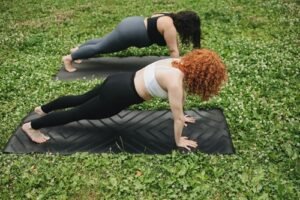
– Plank hold (on grass): 3 × 30–45 seconds
Rest 45 seconds between exercises. This circuit takes 25–30 minutes and hits every major muscle group. For a home-based version of this structure, check out fittheories’ home workout guide.

3. Trail Running and Nature Walks (With Structure)
Casual walking has always been popular, but in 2026, fitness enthusiasts are making it intentional. Structured walking programs — where you alternate pace, add incline, or incorporate intervals — are bridging the gap between “this doesn’t feel like exercise” and measurable fitness gains.
Nordic walking (using poles) is also seeing renewed interest. Studies published in the British Journal of Sports Medicine show Nordic walking engages up to 90% of the body’s muscles and burns 20% more calories than regular walking at the same pace.
Spring structure tip: On your next walk, try this interval approach:
– 5 minutes: easy warm-up pace
– 1 minute: power walk (as fast as you can maintain proper form)
– 2 minutes: recovery pace
– Repeat 6–8 rounds
– 5 minutes: easy cool-down
This 35-minute structured walk burns significantly more calories than the same distance walked at a steady pace.
4. Outdoor Yoga and Sunrise Sessions
Spring mornings offer a brief, beautiful window that urban gym schedules rarely capture: cool air, birdsong, and soft morning light. Outdoor sunrise yoga is gaining traction not just for its physical benefits, but for the mental health reset it provides before the workday begins.
Research from the Journal of Environmental Psychology found that morning nature exposure reduces cortisol levels and improves focus for up to four hours afterward — a meaningful productivity benefit beyond fitness alone.
You don’t need to join a class. A 20-minute personal session on any patch of grass works perfectly:
– Sun salutation flow: 5 rounds
– Warrior I and II sequence: 5 breaths each side
– Tree pose balance: 30 seconds each side
– Seated forward fold: 1 minute
– Savasana: 3–5 minutes
Explore yoga for beginners if you want a structured introduction before taking your practice outside.
5. Cycling and Micro-Adventures
Spring is peak season for recreational cycling, and in 2026, “micro-adventure” culture — short, local outdoor challenges that feel like genuine adventures — is influencing how people approach spring fitness. Instead of a typical 30-minute spin, a micro-adventure might mean cycling to a new neighborhood, exploring a local trail system, or attempting a Saturday morning ride to a destination you’ve never been.
The novelty matters. Psychological research on exercise adherence consistently shows that variety and exploration increase the likelihood of sticking with fitness long-term, far more than any specific workout protocol.
How to Build a Spring Fitness Reset Plan
If winter derailed your routine, resist the urge to go from zero to five workouts per week in April. That approach reliably leads to burnout or injury within two weeks.
Instead, build your spring reset around three principles:
1. Start with what you enjoy outdoors. Enjoyment is the single best predictor of long-term exercise adherence. If you hate running but love cycling, start cycling. Fitness you sustain beats fitness you can’t.
2. Aim for 3 outdoor sessions per week. This is enough frequency to build cardiovascular fitness and establish a habit without overwhelming your schedule or your body.
3. Treat the first two weeks as reactivation, not performance. Your goal in weeks one and two isn’t to hit intensity benchmarks — it’s to remind your body what movement feels like. Shorter, lighter sessions that end with you feeling energized (not exhausted) are ideal.
A simple 4-week spring reset structure:
– Weeks 1–2: 3 × 30-minute walks or easy outdoor sessions
– Weeks 3–4: 2 × moderate sessions (bodyweight circuit or structured walk) + 1 × longer active session (cycling, hiking, yoga flow)
Building this outdoor foundation supports a healthy, active lifestyle that extends well beyond the spring season.
FAQ: Spring Outdoor Workouts
Q: Is outdoor exercise better than the gym for weight loss?
A: Both are effective for weight loss when done consistently. However, outdoor exercise has been shown to increase workout duration and enjoyment, which improves adherence — the real driver of weight loss results. If you’re more likely to exercise outside than in a gym, outdoor training is better for you specifically.
Q: What are the best spring workouts for beginners?
A: Structured walking programs, outdoor bodyweight circuits, and beginner yoga flows are ideal spring starting points. They’re low-barrier, require no equipment, and can be scaled to any fitness level. The walking interval routine outlined above is a great first step.
Q: How does green exercise benefit mental health?
A: Multiple studies confirm that outdoor exercise reduces symptoms of anxiety and depression more effectively than indoor exercise at equivalent intensity. The combination of natural light, nature exposure, and physical movement creates a compounding effect on mood regulation. Even a 10-minute outdoor walk has measurable benefits.
Q: What should I wear for outdoor spring workouts?
A: Dress in moisture-wicking layers you can add or remove as your body temperature changes. Early spring mornings can be cold but warm quickly, so a lightweight zip-up over a fitted base layer is a practical starting point. Don’t skip sunscreen — UV intensity increases in spring even on cloudy days.
Q: How do I stay motivated to exercise outdoors when it rains?
A: Build an indoor backup plan for rainy days so you’re not choosing between working out and getting drenched. A simple home workout routine on rain days keeps your momentum going without losing the outdoor habit you’re building.

Conclusion
Spring 2026 is the perfect moment to take your fitness outside — and the research backs every reason to do it. Green exercise reduces stress, boosts mood, and increases exercise enjoyment in ways that indoor training simply can’t replicate.
Your three key takeaways: start with outdoor activities you actually enjoy, aim for three sessions per week, and treat the first two weeks as gentle reactivation rather than performance. Small, consistent outdoor sessions in April create the fitness foundation that carries you through summer and beyond.
Your action step this week: schedule one outdoor workout into your calendar for each of the next three days. It doesn’t have to be long or intense — a 25-minute walk with the interval structure from this article is the perfect starting point. Step outside, breathe the spring air, and let your body remember what it’s made for.