Aging is inevitable—but losing strength, mobility, and independence doesn’t have to be. In fact, research from organizations like the World Health Organization and the National Institute on Aging shows that consistent physical activity is one of the most powerful tools for maintaining muscle mass, protecting joint health, and extending quality of life.
The concept of active aging is built around a simple idea: your body adapts to the demands you place on it. When you challenge your muscles and balance systems regularly, they respond by staying strong and responsive. When you don’t, they gradually weaken.
This article outlines The Active Aging Protocol—a simple, science-backed approach built around four foundational exercises that preserve strength for life. These movements are safe, scalable, and effective for adults of all ages.
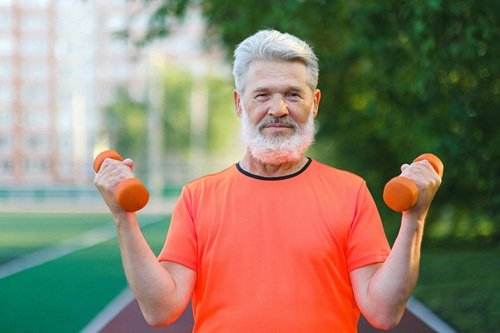
Why Strength Matters More as You Age
After age 30, adults begin to lose muscle mass at a gradual rate. This process, known as sarcopenia, accelerates after age 60 if strength training is not maintained. Reduced muscle mass doesn’t just affect appearance—How it impacts in active aging:
- Balance and fall risk
- Bone density
- Metabolism
- Joint stability
- Daily independence
Strength is not just about lifting heavy weights. It’s about being able to carry groceries, climb stairs, stand up from a chair, and maintain posture without fatigue.
The good news? Muscle tissue responds to training at any age. Even individuals in their 70s, 80s, and beyond can rebuild strength with the right approach and follow active aging protocol.
The Active Aging Protocol: The 4 Essential Movements
Rather than complex gym routines, this protocol focuses on four primary movement patterns. These exercises train the body in ways that translate directly to real life.
1. The Squat: Preserving Lower-Body Strength
The squat is often called the “king of exercises”—and for good reason. It strengthens the hips, thighs, glutes, and core while reinforcing one of the most essential daily movements: sitting and standing.
Why Squats Are Essential
Every time you get out of a chair, step into a car, or use the restroom, you perform a squat pattern. Weak legs increase fall risk and reduce mobility.
How to Perform a Safe Squat
- Stand with feet shoulder-width apart.
- Push hips back as if sitting into a chair.
- Keep chest upright and knees tracking over toes.
- Lower slowly, then press through heels to stand.
Beginner Modification
Use a sturdy chair behind you. Lower until you lightly touch the chair, then stand.
Progression
Hold light dumbbells or a kettlebell for added resistance.
Perform 2–3 sets of 8–12 repetitions.
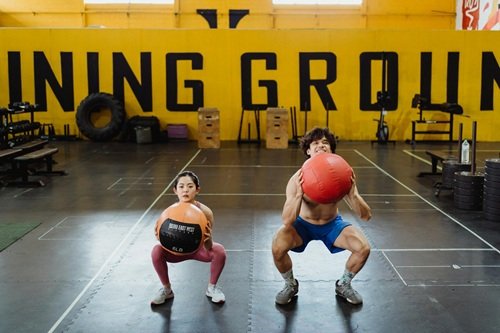
2. The Push Movement: Maintaining Upper-Body Power
Push movements strengthen the chest, shoulders, and triceps—muscles needed for pushing doors, getting up from the floor, and stabilizing the upper body.
Why Push Strength Declines with Age
Upper-body muscle loss can make everyday activities difficult. Maintaining pushing strength helps preserve independence and posture.
Best Option: The Push-Up
Push-ups are highly adaptable and can be performed at different levels.
Wall Push-Up (Beginner):
- Stand facing a wall.
- Place hands shoulder-width apart.
- Bend elbows and lower chest toward wall.
- Push back to start.
Incline Push-Up (Intermediate):
- Use a countertop or sturdy bench.
Floor Push-Up (Advanced):
- Perform on toes or knees.
Aim for 2–3 sets of 8–15 repetitions.
3. The Hinge: Protecting the Back and Hips
The hip hinge trains the posterior chain—glutes, hamstrings, and lower back. This movement is critical for bending safely and lifting objects from the ground.
Why the Hinge Is Crucial
Many back injuries occur due to improper bending mechanics. Strengthening the hinge pattern reduces strain on the spine.
Exercise Option: Romanian Deadlift (Bodyweight or Light Weights)
- Stand tall with soft knees.
- Push hips backward while keeping spine neutral.
- Lower torso until you feel tension in hamstrings.
- Drive hips forward to stand.
Beginners can practice by holding a broomstick along the spine to maintain alignment.
Perform 2–3 sets of 8–12 repetitions.
Also Read: Is an Anti-Inflammatory Diet Right for You? 12 Foods to Avoid and 12 to Add to Your Plate | Telehealth and Digital Health Apps: 5 Reasons Virtual Care Is Growing Faster Than Ever | 5 powerful Minimalist Living Tips for a Stress-Free Life | 5 Easy Ways to Declutter Your Home and Boost Your Mental Clarity | Sustainable Lifestyle 2025
4. The Carry: Building Functional Core Stability
One of the most overlooked exercises in active aging is the loaded carry. Carrying weight builds grip strength, core stability, and shoulder endurance—all critical for daily tasks.
Why Carries Matter
Studies show grip strength is strongly associated with longevity and overall health outcomes. Carrying groceries, luggage, or household items requires coordinated full-body strength.
Exercise Option: Farmer’s Carry
- Hold a dumbbell in each hand.
- Stand tall with shoulders down and back.
- Walk slowly for 20–40 seconds.
- Rest and repeat.
Beginners can carry one weight at a time (suitcase carry) for additional core engagement.
Complete 2–4 rounds.
How to Structure the Active Aging Protocol
You don’t need to train every day for active aging. Consistency matters more than intensity.
Suggested Weekly Schedule:
- 2–3 strength sessions per week
- 20–30 minutes per session
- Rest at least one day between sessions
Sample Routine
- Squats – 3 sets
- Push-Ups – 3 sets
- Romanian Deadlifts – 3 sets
- Farmer’s Carries – 3 rounds
This simple routine trains the entire body efficiently.
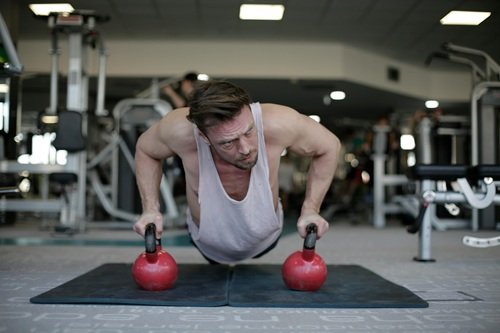
Supporting Elements for Lifelong Strength and active aging
1. Balance Training
Falls are a major health risk for older adults. Incorporate single-leg stands or heel-to-toe walking to maintain stability.
2. Mobility Work
Gentle stretching and controlled joint movements keep tissues resilient. Focus on hips, shoulders, and ankles.
3. Protein Intake
Adequate dietary protein supports muscle repair. Many experts recommend 0.7–1 gram of protein per pound of bodyweight for active adults, though needs vary.
4. Recovery
Sleep and hydration are essential. Muscles grow and repair during recovery, not during workouts.
Safety Considerations
Before starting a new fitness routine, consult a healthcare professional—especially if you have existing conditions.
General safety tips:
- Start light and progress gradually
- Prioritize proper form over heavy weights
- Stop if you feel sharp or persistent pain
- Warm up before training
Active aging is about sustainability—not extremes.
The Long-Term Benefits of Active Aging
Following a structured strength routine can support you in active aging in following ways:
- Improve bone density
- Reduce fall risk
- Increase energy levels
- Support joint health
- Enhance metabolic function
- Preserve independence
More importantly, it builds confidence. Strength training teaches your body that it is capable, adaptable, and resilient—at any age.
Frequently Asked Questions
Is it too late to start strength training at 60 or 70?
No. Research consistently shows that older adults can gain significant strength improvements even when starting later in life.
Do I need a gym membership?
Not necessarily. Bodyweight movements and basic dumbbells are sufficient for most people.
How long until I see results?
Most individuals notice strength improvements within 4–6 weeks of consistent training.
Final Thoughts: Strength Is a Lifelong Investment
Aging doesn’t mean decline. It means adaptation. By focusing on four foundational movement patterns—squat, push, hinge, and carry—you create a powerful foundation for lifelong strength.
The Active Aging Protocol is simple, practical, and sustainable. It doesn’t require complicated equipment or hours in the gym. It requires commitment, consistency, and the belief that strength is worth preserving.
Your future mobility, independence, and vitality depend on the habits you build today. Start small. Move often. Train smart. And give your body the stimulus it needs to stay strong—for life.

Also Read: H3N2 Clade K: Symptoms, Duration, and the Best Recovery Protocol for This Winter | Silent Walks: Why Gen Z Is Ditching Headphones for Mindful Mornings in 2025 | What is 75 hard challenge? | HOW YOGA BENEFITS YOU IN EVERYDAY LIFE | WHAT IS CARB CYCLE – FAST FAT BURNING PROCESS! | Fittheories