Yoga for Beginners: 8 Essential Tips to Start Your Practice Today
Most people who want to start yoga face the same paradox: the practice looks deceptively simple from the outside and overwhelming from the inside. Scroll through any yoga platform and you encounter advanced inversions, complex Sanskrit terminology, and practitioners with decades of flexibility training. None of that is where yoga actually begins.
Yoga for beginners starts with breathing, basic body awareness, and a willingness to stay present in a pose for more than thirty seconds. Research published on PubMed demonstrates that even short-duration yoga practice — as little as eight weeks of two to three sessions per week — produces measurable improvements in flexibility, balance, perceived stress, and sleep quality. The threshold for benefits is low. The barrier to entry is lower still.
This guide provides eight essential, practical tips for yoga for beginners, alongside the foundational poses, scheduling guidance, equipment basics, and realistic expectations for your first weeks of practice.
What Is Yoga, and Why Should Beginners Consider It?
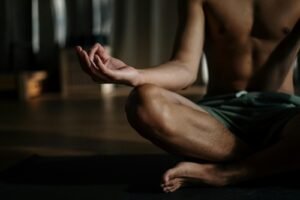
Yoga is a mind-body discipline originating in ancient India that combines physical postures (asanas), breathing techniques (pranayama), and focused attention to create an integrated practice. In a modern fitness context, it functions as a highly versatile training tool that improves flexibility, muscular endurance, balance, and stress regulation simultaneously — a combination rarely achievable through a single modality.
According to Harvard Health Publishing, consistent yoga practice reduces markers of chronic stress, lowers resting blood pressure, and improves proprioception (the body’s awareness of its position in space). For beginners entering yoga primarily for physical fitness, the psychological benefits often become equally valued within four to six weeks of regular practice.
As a yoga for beginners entry point, this guide focuses on accessible, practical instruction — not philosophy or spirituality, though both dimensions are available to explore as your practice develops.
The 4 Most Beginner-Friendly Yoga Styles
Before committing to a style, yoga beginners benefit from understanding how the major modern styles differ:
Hatha Yoga: The most common beginner recommendation. Slower-paced, with individual poses held for multiple breaths. Ideal for learning alignment, breathing, and foundational postures.
Vinyasa Yoga: A flowing style that links movement to breath, transitioning continuously between poses. More cardiovascular than Hatha. Suitable yoga for beginners with a fitness background who want dynamic training.
Yin Yoga: A deeply passive, stretch-focused style where poses are held for three to five minutes. Excellent for improving connective tissue flexibility and counteracting the effects of intense training or sedentary work.
Restorative Yoga: The gentlest option — poses are held with support from props (blankets, bolsters) for five to ten minutes. Best for stress recovery, injury rehabilitation, or beginners with limited mobility.
For most yoga beginners, starting with Hatha two to three times per week provides the best foundation. Once basic poses and breath awareness are established, exploring Vinyasa or Yin adds useful variety.
8 Essential Tips – Yoga for Beginners
Tip 1: Start With Breath Awareness, Not Poses
The most common yoga for beginners mistake is treating it as a stretching class and ignoring the breath. Every yoga pose is driven by the breath — not the other way around. Before your first session, spend five minutes learning the basic ujjayi breath: inhale slowly through the nose for a count of four, pause briefly, then exhale through the nose for a count of four, creating a gentle constriction at the back of the throat.
This breath pattern activates the parasympathetic nervous system, reduces cortisol, and provides a consistent internal rhythm to anchor your movement. Beginners who prioritise breath from the first session progress significantly faster than those who focus exclusively on achieving pose shapes.
Tip 2: You Do Not Need to Be Flexible to Start Yoga
The most persistent yoga for beginners myth is that you need a baseline level of flexibility to begin. Flexibility is a product of yoga practice — not a prerequisite for it. Most foundational poses can be performed without touching your toes, sitting cross-legged comfortably, or achieving any particular range of motion.
Tight hamstrings? Use a strap or bend your knees in forward folds. Limited hip mobility? Elevate your hips on a folded blanket in seated poses. Inflexible shoulders? Modify arm positions in backbends. Yoga is a practice of progressive adaptation. The blocks and straps exist precisely to make poses accessible at every starting point. For a full library of beginner-accessible poses, see our yoga poses for beginners guide.
Tip 3: Invest in a Quality Mat Before Anything Else
Yoga for beginners requires minimal equipment, but the mat is non-negotiable. A quality mat provides grip, joint cushioning, and a dedicated physical space that cues your nervous system into practice mode. Budget mats with poor grip create an unstable surface that undermines alignment and increases injury risk.
Look for a mat with at least 4mm thickness for joint support, a non-slip surface (natural rubber or PU are reliable materials), and a size that accommodates your full height plus some additional length. Beyond the mat, optional props include:
- Yoga blocks (2): Bring the floor closer in standing forward folds and seated poses.
- A strap: Extends your reach in hamstring and shoulder stretches.
- A folded blanket: Supports hips, knees, or head in floor poses.
You do not need all of these immediately. Start with the mat and one block.
Tip 4: Begin With These 5 Foundational Poses
Rather than attempting a full class sequence from day one, yoga for beginners should master five foundational poses that appear in virtually every style of yoga. Proficiency in these five creates a functional base for navigating most beginner-level classes:
1. Mountain Pose (Tadasana): The reference point for all standing poses. Stand with feet hip-width apart, weight evenly distributed across both feet, arms at sides, spine long. Hold for 5–10 breaths. Learn what neutral alignment feels like in your body.
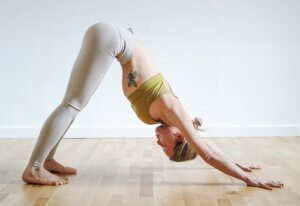
2. Downward-Facing Dog (Adho Mukha Svanasana): An inverted V-shape from hands and feet. Strengthens the arms, stretches the hamstrings and calves, and develops shoulder stability. One of the most-used poses in yoga — expect to visit it dozens of times per session.
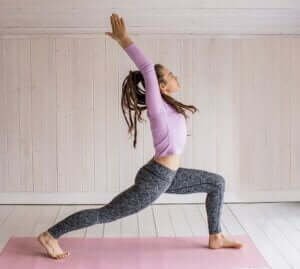
3. Warrior I (Virabhadrasana I): A lunging standing pose that builds leg strength, opens the hip flexors, and develops balance. Forms the foundation for most standing sequence work in yoga for beginners classes.
4. Child’s Pose (Balasana): A resting pose with knees wide, hips toward heels, and forehead lowered toward the mat. Return here whenever you need a break during practice. It is not a passive pose — it actively stretches the lower back, hips, and inner thighs.
5. Corpse Pose (Savasana): The final resting pose of every yoga session. Lie flat on your back, arms slightly away from the body, eyes closed, body fully released. Do not skip this. The physiological integration of practice occurs during Savasana.
Tip 5: Practice Three Times Per Week for the First Month
Frequency matters more than duration in yoga for beginners. Three 20–30 minute sessions per week produces faster adaptation than one 90-minute weekly session because the nervous system learns motor patterns through repetition at regular intervals, not through volume alone.
A practical yoga for beginners weekly schedule:
- Day 1: Foundational poses + breath awareness (25 minutes)
- Day 2: Rest or light walking
- Day 3: Beginner Hatha class or guided flow (30 minutes)
- Day 4: Rest
- Day 5: Yin or restorative practice (20–30 minutes)
- Days 6–7: Rest or gentle movement
This schedule provides adequate stimulus for adaptation while allowing full recovery. After four to six weeks, extend session durations and consider adding a fourth weekly practice. According to ACE Fitness, most beginners notice tangible improvements in flexibility and stress levels within three to four weeks of this frequency.
Tip 6: Use Online Guided Classes Before Attending a Studio
In-person yoga classes can feel intimidating for beginners — unfamiliar Sanskrit terms, the pressure to keep pace with experienced practitioners, and uncertainty about alignment can create anxiety that undermines learning. Online guided yoga for beginners classes remove these barriers entirely.
Platforms with strong beginner libraries (Yoga with Adriene on YouTube is the most widely recommended free resource) allow you to pause, rewind, and repeat sequences until poses feel familiar. Begin with explicitly labelled “beginner” or “foundations” classes. Once you have two to three weeks of home practice, an in-person class becomes significantly less daunting — and more productive, since you arrive with pose recognition and body awareness already established.
Tip 7: Distinguish Between Discomfort and Pain
Yoga produces sensation. Some of this sensation — particularly in flexibility-focused poses — involves a mild pulling or stretching feeling that is entirely normal. Sharp, acute, or joint-specific pain is categorically different and signals that you have moved beyond your current range of motion.
Yoga for beginners, the practical guideline is: steady engagement and mild stretch are acceptable; any sensation in a joint (knee, hip, lower back) rather than in a muscle belly should prompt an immediate, gentle modification. Come slightly out of the pose, introduce a prop, or switch to a gentler variation. Yoga injuries in beginners almost always result from forcing range of motion before connective tissue has adapted — not from the practice itself.
Tip 8: Link Your Yoga Practice to a Broader Wellness Goal
Yoga for beginners is most sustainable when it connects to a specific, meaningful goal. Whether that is weight management, stress reduction, improved sleep, back pain relief, or complementary recovery work alongside another training modality — having a clear purpose shapes which style you pursue, how frequently you practice, and how you measure progress.
For those using yoga as a complement to a weight management plan, our yoga for weight loss guide details how specific styles and sequences target metabolic rate and body composition. For those drawn to yoga purely for its holistic wellness benefits, our yoga benefits overview provides a research-backed summary of what consistent practice delivers across physical and psychological dimensions.
What to Expect in Your First 8 Weeks of Yoga
Week 1–2: Unfamiliarity and mild muscle soreness are normal. Focus entirely on pose recognition and breath. Do not compare yourself to anyone — including previous versions of yourself.
Week 3–4: Poses begin to feel less foreign. The breath starts to flow more naturally. In yoga for beginners most people notice their first tangible flexibility improvements around this time, particularly in the hamstrings and hips.
Week 5–6: You develop a preferred style or teacher. Sessions feel less effortful and more absorbing. Sleep quality often improves noticeably at this stage.
Week 7–8: Foundational poses feel established. You can hold Warrior sequences for longer, find Downward Dog restful rather than strenuous, and navigate basic class sequences with confidence. This is the point at which yoga for beginners transitions to yoga as a sustainable practice.
Essential Equipment Checklist in Yoga for Beginners
| Item | Priority | Notes |
|---|---|---|
| Yoga mat (4–6mm, non-slip) | Essential | Natural rubber or PU surface recommended |
| Two yoga blocks | High | Cork or foam — both work well |
| Yoga strap | Medium | A standard leather belt functions as a substitute initially |
| Blanket | Low | Any firm blanket works for prop support |
| Water bottle | Essential | Hydrate before and after, lightly during |
Avoid purchasing expensive yoga clothing or props before establishing a consistent practice. A quality mat and two blocks are sufficient for the first two to three months.
FAQ: Yoga for Beginners
Q: How often should a beginner practice yoga?
Three sessions per week is the optimal starting frequency for yoga for beginners. This provides enough repetition for motor learning and flexibility adaptation while allowing adequate recovery. After four to six weeks, a fourth session can be added.
Q: Can yoga help beginners lose weight?
Yes, though the mechanism is indirect. Dynamic styles like Vinyasa yoga elevate heart rate and increase calorie expenditure (approximately 130–200 calories per 30-minute session). More significantly, regular yoga practice reduces cortisol-driven overeating, improves sleep quality, and increases body awareness — all of which support fat loss. For a detailed breakdown, see our yoga for weight loss guide.
Q: What is the best time of day to practice yoga as a beginner?
Morning yoga practice activates the body and mind before the day begins, while evening yoga serves as a stress-release and wind-down tool. Both are effective. The best time is the one you can sustain consistently — regularity outperforms timing.
Q: Do you need to be fit to start yoga?
No. Yoga for beginners is genuinely accessible at any starting fitness level. Restorative and Hatha yoga are specifically designed for those with limited strength, flexibility, or prior exercise experience. Any pose can be modified to accommodate your current capacity.
Q: How long before a beginner sees results from yoga?
Most yoga beginners notice improved flexibility and reduced muscle tension within two to four weeks. Stress reduction and sleep quality improvements often appear at the same time. Visible changes in posture and body composition typically emerge between six and twelve weeks of consistent practice.
Q: What should I wear to yoga as a beginner?
Comfortable, form-fitting clothing that allows full range of motion without bunching or restricting. Avoid loose shorts that shift during inversions. Yoga is practised barefoot — no specialist footwear is required.
Conclusion
Yoga for beginners does not require flexibility, specialist equipment, or previous fitness experience. It requires a mat, a willingness to breathe intentionally, and three sessions per week. The eight tips above — breath first, no flexibility prerequisite, foundational poses, consistent scheduling, guided online classes, pain awareness, appropriate equipment, and a linked wellness goal — provide a complete framework for building a practice that lasts.
Your three immediate action steps:
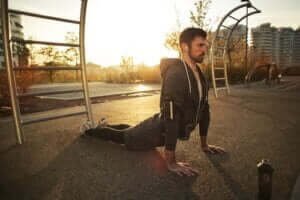
- Unroll a mat — even a non-specialist exercise mat works for the first session — and spend ten minutes learning Mountain Pose, Downward Dog, and Child’s Pose.
- Schedule three 25-minute yoga sessions for next week in your calendar.
- Read our yoga poses for beginners guide to build your foundational pose library before your first full session.
The practice builds on itself. The hardest part of yoga for beginners is the first session — not because it is physically demanding, but because beginning anything unfamiliar requires a moment of commitment. That moment is now.
Consult a qualified fitness professional before making significant changes to your routine.